
 EN
EN



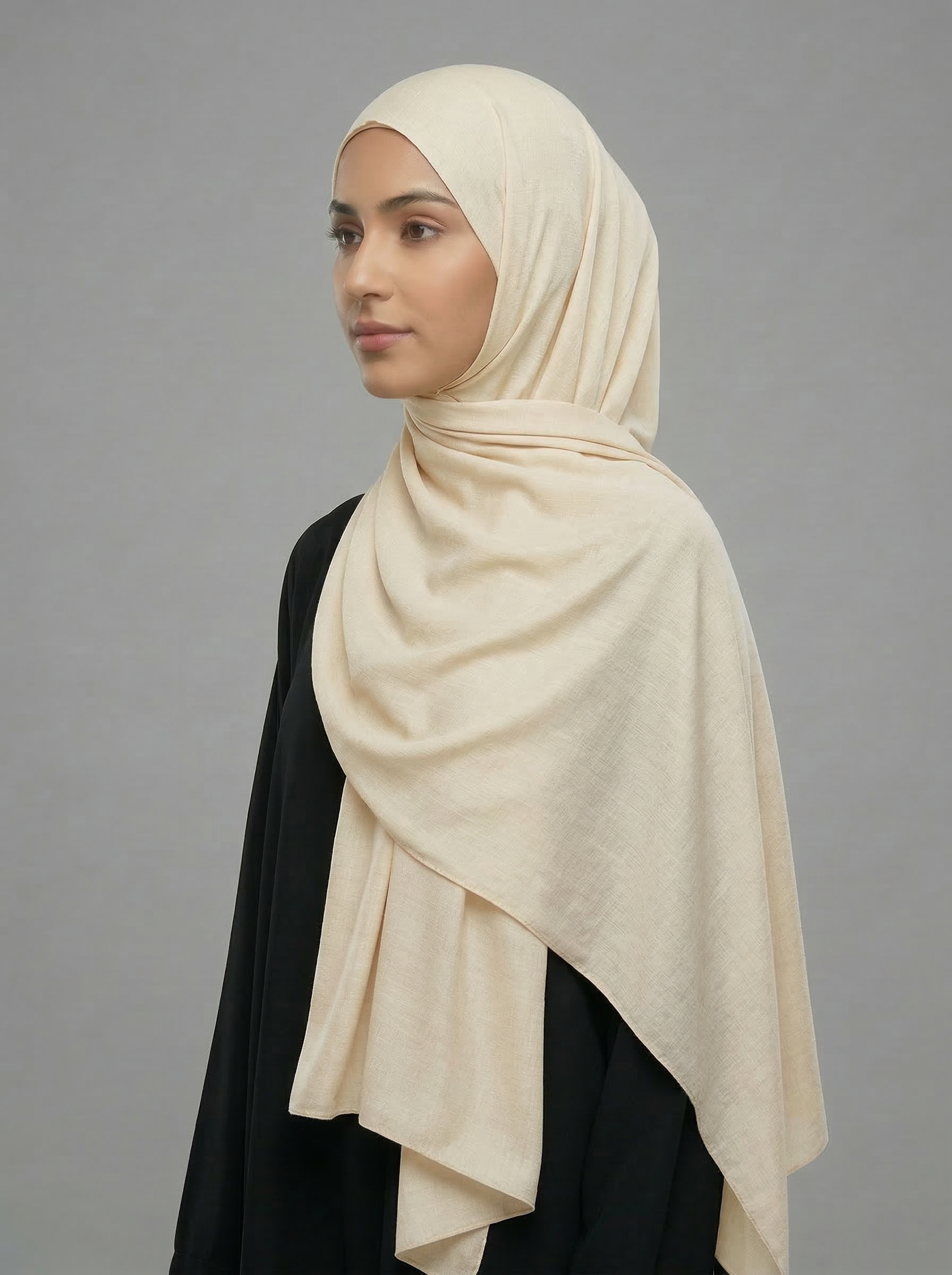
Understanding how fabric responds to environmental conditions is essential for women who wear hijab daily across diverse global climates. The choice of material directly impacts comfort, appearance, and wearability throughout seasonal changes and geographic transitions. Modal fabric has emerged as a preferred choice for hijab manufacturing due to its unique fiber structure and responsive characteristics when exposed to varying humidity levels and temperature ranges. This article examines the specific mechanisms through which hijab modal adapts to different atmospheric conditions, providing practical insights for users in tropical, arid, temperate, and continental climate zones.
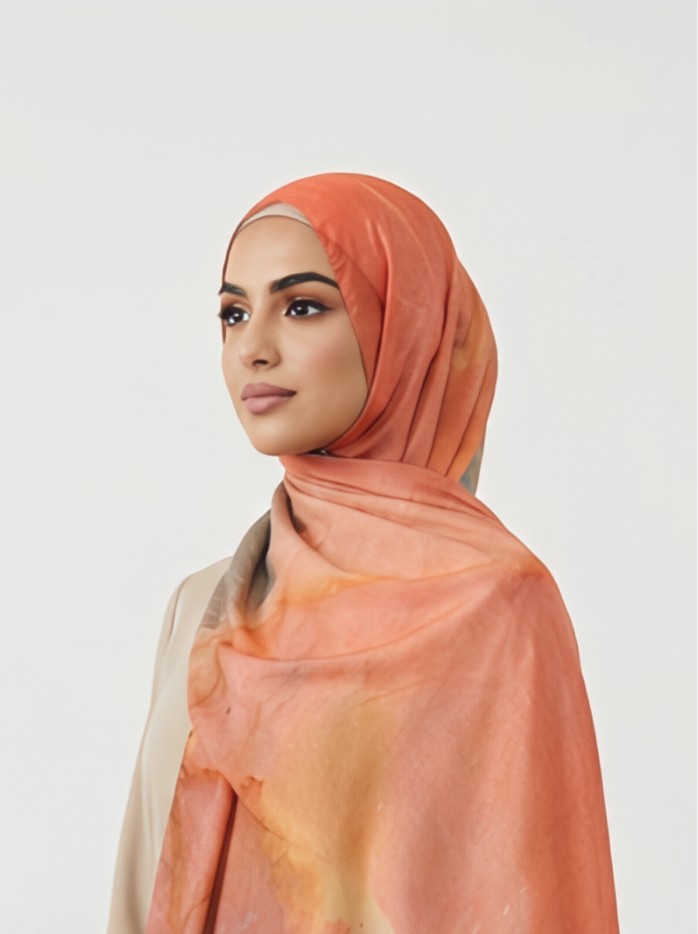
Modal fiber is produced from beech tree cellulose through a specialized spinning process that creates a smooth, highly absorbent material with excellent moisture management properties. When configured as a hijab textile, modal demonstrates superior breathability compared to synthetic alternatives while maintaining structural integrity across fluctuating weather patterns. The fiber's hygroscopic nature allows it to absorb moisture vapor from the skin while simultaneously releasing it to the surrounding air, creating a dynamic equilibrium that adjusts according to ambient conditions. This responsive behavior makes hijab modal particularly valuable for women navigating multiple climate zones or experiencing significant daily temperature swings in their local environment.
The Science Behind Modal Fiber Response to Atmospheric Moisture
Molecular Structure and Hygroscopic Properties
The cellular architecture of modal fibers contains numerous hydroxyl groups along the cellulose polymer chains, which form hydrogen bonds with water molecules in the surrounding atmosphere. This chemical affinity enables hijab modal to absorb up to fifty percent of its weight in moisture without feeling damp or uncomfortable against the skin. The absorption process occurs gradually as humidity levels rise, with water molecules penetrating the amorphous regions of the fiber structure first before saturating crystalline zones. This staged absorption prevents the fabric from becoming suddenly wet or clingy during rapid humidity increases, such as when moving from air-conditioned indoor spaces to humid outdoor environments.
Unlike synthetic fibers that repel moisture and trap perspiration against the skin, hijab modal actively participates in moisture transport through capillary action within its fiber structure. The microscopic channels running along each fiber facilitate water movement from high-concentration areas near the skin toward lower-concentration zones at the fabric surface. This wicking effect accelerates evaporative cooling during hot, humid conditions while preventing moisture accumulation that could lead to discomfort or odor development. The consistent performance of modal across varying humidity ranges makes it exceptionally reliable for hijab applications where predictable comfort is essential.
Vapor Transmission and Breathability Mechanisms
Breathability in hijab modal results from both the inherent porosity of individual fibers and the geometric arrangement of yarns within the woven or knitted fabric structure. Modal fibers contain micro-pores that permit air and water vapor molecules to pass through the material, creating pathways for heat and moisture dissipation. When environmental humidity is low, these channels facilitate rapid moisture evaporation from the fabric surface, keeping the wearer cool and dry. Conversely, in high-humidity conditions where evaporation rates naturally decrease, the fiber's absorption capacity provides a buffer that temporarily stores excess moisture until atmospheric conditions become more favorable for release.
The vapor permeability of hijab modal remains relatively constant across temperature ranges, unlike some natural fibers that become less breathable when cold or excessively porous when heated. This stability ensures consistent comfort whether the wearer experiences morning chill, midday heat, or evening cooling cycles. Testing protocols measuring moisture vapor transmission rates demonstrate that modal maintains superior performance compared to polyester-based hijabs, which trap perspiration and create uncomfortable microenvironments between fabric and skin. For women living in climates with high diurnal temperature variation, this consistent breathability eliminates the need for frequent hijab changes throughout the day.
Temperature Regulation Performance Across Climate Zones
Thermal Adaptation in Hot and Humid Tropical Environments
Tropical climates present dual challenges of elevated temperatures combined with persistent high humidity levels, often exceeding seventy-five percent relative humidity during rainy seasons. In these conditions, hijab modal leverages its moisture absorption capacity to draw perspiration away from the scalp and forehead, distributing it across a larger fabric surface area for enhanced evaporation potential. Although evaporation rates are naturally slower in saturated air, the cooling effect still occurs as moisture moves from warm skin to slightly cooler fabric layers. The soft drape of modal also prevents fabric from clinging tightly to the head and neck, maintaining air circulation gaps that facilitate convective heat loss.
During tropical downpours or sudden humidity spikes, hijab modal absorbs atmospheric moisture without collapsing or losing shape, a common problem with lower-quality cotton blends. The fiber's dimensional stability under wet conditions prevents the sagging and distortion that compromise coverage and require constant readjustment. After exposure to rain or extreme humidity, modal dries relatively quickly once conditions improve, releasing stored moisture efficiently without developing the musty odors associated with synthetic materials. This resilience makes hijab modal particularly suitable for Southeast Asian, Central African, and equatorial South American climates where humidity remains consistently elevated throughout the year.
Performance in Arid Desert and Low-Humidity Climates
Desert environments and arid regions present opposite challenges, with extremely low humidity levels often dropping below twenty percent combined with intense solar radiation and significant temperature differentials between day and night. In these conditions, hijab modal functions primarily as a moisture conservation layer, helping to maintain skin hydration by reducing evaporative water loss from the scalp and face. The fabric's smooth surface reflects a portion of incident solar radiation while its cellular structure provides insulation against both heat penetration during daylight hours and heat loss during cool desert nights.
The hygroscopic nature of modal becomes advantageous in arid climates by drawing minimal atmospheric moisture toward the skin rather than away from it, helping maintain comfortable moisture levels in the microclimate between fabric and body. This moisture retention prevents the excessive dryness and skin irritation commonly experienced with purely synthetic hijabs in desert conditions. Additionally, modal's natural smoothness reduces friction against skin and hair, minimizing static electricity buildup that becomes problematic in low-humidity environments. Women in Middle Eastern desert regions, North African arid zones, and dry continental interiors benefit from modal's ability to provide protective coverage without exacerbating environmental dryness.
Adaptation to Temperate and Continental Climate Variability
Temperate and continental climates exhibit pronounced seasonal variations with humid summers, dry winters, and transitional spring and autumn periods that may experience rapid weather changes. Hijab modal demonstrates exceptional versatility across these fluctuating conditions due to its adaptive moisture management capabilities. During warm, humid summer months, the fabric functions similarly to its tropical performance profile, actively wicking moisture and facilitating cooling. As temperatures drop and humidity decreases in autumn and winter, modal transitions to a more insulating role, trapping warm air near the head while preventing excessive moisture loss that could lead to chilling.
The thermal properties of hijab modal result from both its fiber composition and its typical fabric weight. Standard modal hijabs offer moderate insulation suitable for temperatures ranging from ten to thirty degrees Celsius, making them ideal for three-season wear in temperate zones. The fabric's ability to regulate temperature passively, without requiring active adjustment from the wearer, simplifies daily hijab selection and eliminates the need for extensive seasonal wardrobe changes. Women in European, North American temperate, and East Asian continental climates particularly value modal's consistent performance across the wide temperature and humidity ranges characteristic of these regions.
Practical Considerations for Daily Wear Across Climate Conditions
Moisture Management During Physical Activity and Movement
Physical activity significantly increases perspiration rates regardless of ambient climate conditions, creating localized high-humidity zones beneath hijab coverage. Modal's rapid moisture absorption and distribution capabilities become especially important during commuting, workplace activity, or exercise, when perspiration rates may increase five to ten times above resting levels. The fabric quickly absorbs perspiration from high-production areas like the forehead and temples, spreading moisture laterally across the hijab surface where it can evaporate more effectively. This distribution prevents the concentrated wet spots that create discomfort and visible staining with less absorbent materials.
During prolonged physical activity in hot climates, hijab modal maintains its structural integrity even when saturated, unlike cotton which becomes heavy and loses shape when fully wet. The fiber's strength retention under moist conditions ensures that coverage remains secure and that the hijab continues to drape properly without requiring frequent readjustment. After activity periods, modal releases absorbed moisture relatively quickly as perspiration rates decline, restoring comfort without requiring immediate fabric changes. This recovery characteristic makes hijab modal particularly valuable for active professionals, students, and athletes who require reliable performance throughout demanding daily schedules.
Care and Maintenance for Optimal Climate Response
The climate-responsive properties of hijab modal depend partially on proper care practices that preserve fiber structure and maintain optimal hygroscopic function. Frequent washing with harsh detergents or fabric softeners can coat fiber surfaces, reducing their moisture absorption capacity and diminishing breathability. Gentle laundering with mild detergents preserves the natural hydroxyl groups responsible for moisture bonding, ensuring continued climate adaptation performance. Air drying is preferable to high-heat machine drying, as excessive heat can cause fiber shrinkage and reduce the dimensional stability that contributes to consistent fit and drape across varying humidity levels.
Storage conditions also influence how hijab modal responds to climate variations when worn. Fabrics stored in excessively dry environments may require a brief adjustment period to rehydrate their fiber structure and restore optimal moisture management function. Conversely, modal stored in damp conditions may absorb excess environmental moisture, requiring brief airing before wearing to achieve ideal comfort levels. Women who travel frequently across climate zones or experience seasonal storage transitions should allow hijab modal a short equilibration period after unpacking, during which the fabric naturally adjusts its moisture content to match local atmospheric conditions. This simple practice ensures optimal performance immediately upon wearing.
Selecting Appropriate Modal Weight and Weave for Specific Climates
Not all hijab modal products perform identically across climate variations, as fabric weight, weave density, and finishing treatments significantly affect thermal and moisture management characteristics. Lightweight modal hijabs with open weave structures maximize breathability and evaporative cooling, making them ideal for consistently hot and humid tropical environments. These fabrics typically weigh between sixty and ninety grams per square meter, providing adequate coverage while minimizing heat retention. The increased air permeability of lighter weaves facilitates convective cooling and rapid moisture evaporation during peak heat periods.
Medium-weight modal fabrics, ranging from ninety to one hundred thirty grams per square meter, offer versatile performance across temperate and variable climates where both cooling and insulation may be required seasonally. These hijabs provide sufficient thermal mass to buffer against temperature fluctuations while maintaining adequate breathability for comfort during warmer periods. The balanced construction makes medium-weight hijab modal suitable for year-round wear in regions with moderate climate variability. Heavier modal blends or double-layer constructions serve specialized needs in very cold climates or for winter wear, sacrificing some breathability for enhanced insulation and wind resistance while retaining modal's superior moisture management compared to purely synthetic thermal fabrics.
Comparative Performance Analysis with Alternative Hijab Fabrics
Modal Versus Cotton in Humid Environments
Cotton has traditionally been valued for hijab applications due to its natural fiber composition and reasonable moisture absorption capacity. However, direct comparison reveals that hijab modal outperforms cotton in high-humidity environments through several mechanisms. Modal absorbs moisture more rapidly than cotton, preventing the accumulation of perspiration between skin and fabric during sudden humidity increases or physical activity. The superior absorption rate results from modal's more accessible fiber structure and higher concentration of hydroxyl binding sites per unit mass compared to cotton's more crystalline cellulose arrangement.
Additionally, modal releases absorbed moisture more efficiently than cotton once humidity levels decrease or evaporation conditions improve. Cotton tends to retain absorbed water longer, maintaining a damp feel that becomes uncomfortable during extended wear in variable conditions. The faster drying characteristic of hijab modal reduces the time spent in uncomfortable transition states and minimizes the risk of odor development from bacterial growth in persistently moist fabric. Modal's smoother fiber surface also resists the roughening and pilling that degraded cotton develops after repeated wet-dry cycles, maintaining a more refined appearance and comfortable texture throughout the garment's lifespan.
Modal Versus Synthetic Performance in Temperature Extremes
Polyester and other synthetic hijab fabrics offer durability and color retention advantages but demonstrate inferior climate adaptation compared to hijab modal. Synthetic fibers are hydrophobic, meaning they repel rather than absorb moisture, which prevents effective perspiration management and creates uncomfortable humid microclimates against the skin. During hot weather, synthetic hijabs trap body heat and moisture, significantly reducing wearer comfort and potentially contributing to heat stress in extreme conditions. The lack of moisture absorption also means synthetic fabrics provide no evaporative cooling benefit, relying entirely on air circulation for heat dissipation.
In cold, dry conditions, synthetic hijabs offer minimal insulation value due to their smooth, non-porous structure and lack of moisture-holding capacity that could provide latent heat buffering. The static electricity generated by synthetic materials in low-humidity environments creates additional discomfort and styling challenges. Hijab modal avoids these limitations through its natural fiber structure that balances moisture management, thermal regulation, and static resistance. While synthetic blends may incorporate small percentages of modal to improve performance, pure or high-content modal hijabs deliver consistently superior climate adaptation across the full range of environmental conditions women encounter globally.
Long-Term Performance Retention Across Climate Exposures
The durability of climate-responsive properties distinguishes high-quality hijab modal from alternatives that may perform well initially but degrade with repeated environmental exposure. Modal fibers maintain their hygroscopic characteristics through hundreds of wear and wash cycles when properly cared for, as the moisture-binding hydroxyl groups are integral to the cellulose molecular structure rather than surface treatments that wash away. This inherent stability ensures that hijab modal continues responding appropriately to humidity and temperature variations throughout its functional lifespan, providing reliable performance season after season.
Exposure to intense sunlight, particularly ultraviolet radiation in tropical and high-altitude environments, gradually degrades all natural fibers through photo-oxidation processes. However, modal demonstrates superior UV resistance compared to cotton, maintaining fiber strength and moisture management capabilities longer under sustained solar exposure. The beech-derived cellulose in modal contains fewer impurities and a more uniform molecular structure than cotton, which contributes to more predictable aging characteristics and extended service life. Women investing in quality hijab modal can expect consistent climate adaptation performance for significantly longer periods than comparable cotton or synthetic alternatives, representing better long-term value despite potentially higher initial costs.
FAQ
Does hijab modal work well in extremely humid climates above 90% relative humidity?
Yes, hijab modal performs effectively even in extreme humidity conditions above ninety percent relative humidity. While evaporation rates naturally decrease as air becomes saturated, modal's high absorption capacity allows it to temporarily store significant moisture without feeling wet or uncomfortable against skin. The fabric continues to wick perspiration away from the scalp and distribute it across its surface, maintaining a more comfortable microclimate than synthetic alternatives. Once humidity levels decrease even slightly, modal rapidly releases stored moisture, quickly restoring optimal comfort levels.
Can hijab modal adapt quickly when moving between air-conditioned buildings and hot outdoor environments?
Hijab modal demonstrates excellent adaptability during rapid climate transitions such as moving between climate-controlled indoor spaces and hot outdoor conditions. The fabric's moisture management system responds within minutes to changing temperature and humidity levels, adjusting its absorption and release rates accordingly. When exiting air conditioning into heat, modal begins absorbing perspiration immediately while its breathable structure prevents heat buildup. When returning indoors, the fabric releases excess moisture and adjusts to the drier, cooler conditions without creating clammy discomfort during the transition period.
How does hijab modal perform in cold, windy winter conditions with low humidity?
In cold, windy, low-humidity winter environments, hijab modal provides effective insulation while preventing the excessive dryness associated with synthetic materials. The fabric's cellular structure traps warm air near the head, creating an insulating layer that reduces heat loss to cold external air. Modal's moisture retention properties help maintain comfortable humidity levels in the microclimate between fabric and skin, preventing the dry, irritated scalp conditions that often occur with winter hijab wear. The natural fiber structure also eliminates static electricity problems common with synthetic fabrics in low-humidity conditions, maintaining smooth drape and easy styling.
Does the color or dye treatment of hijab modal affect its climate response properties?
The dyeing and finishing processes applied to hijab modal can moderately affect its climate-responsive properties, though high-quality manufacturing minimizes these impacts. Reactive dyes that form chemical bonds with cellulose fibers have minimal effect on moisture management capabilities, while heavy resin finishes or waterproof coatings can significantly reduce breathability and absorption capacity. Darker colors may absorb more solar radiation in hot climates, slightly increasing heat load, but this effect is minor compared to the fabric's inherent cooling properties. When selecting hijab modal, choosing products from manufacturers who use fiber-friendly dyeing processes ensures optimal climate adaptation performance across all color options.
Table of Contents
- The Science Behind Modal Fiber Response to Atmospheric Moisture
- Temperature Regulation Performance Across Climate Zones
- Practical Considerations for Daily Wear Across Climate Conditions
- Comparative Performance Analysis with Alternative Hijab Fabrics
-
FAQ
- Does hijab modal work well in extremely humid climates above 90% relative humidity?
- Can hijab modal adapt quickly when moving between air-conditioned buildings and hot outdoor environments?
- How does hijab modal perform in cold, windy winter conditions with low humidity?
- Does the color or dye treatment of hijab modal affect its climate response properties?